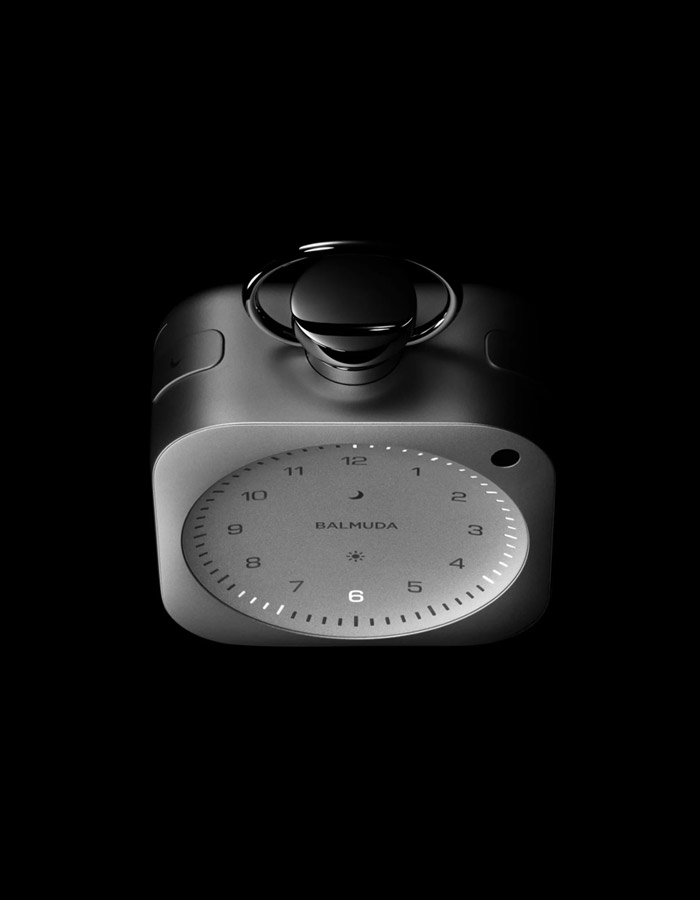
Your Brand should feel Human
People judge companies the way they judge people. Most companies respond by sounding like no one in particular.
Read the homepages of ten companies in any one sector and cover the logos. In most cases you will struggle to tell them apart. The same claims appear in the same order, in the same careful language, beside the same kind of image. Each company has real people behind it, with opinions, standards and a reason for starting. Very little of that reaches the page.
This matters more than it appears to. Customers, investors and employees do not relate to organizations as abstract entities. They relate to them as they would to a person, and they make the same judgments they would make about a person. A brand that gives them no one to relate to leaves that judgment to chance.
People treat companies as people
The tendency is well documented. In the 1990s, Byron Reeves and Clifford Nass at Stanford ran a long series of experiments showing that people apply social rules to computers and media: they are polite to them, respond to flattery from them and attribute personality to them, while knowing perfectly well that they are machines. Nicholas Epley and his colleagues later described the conditions under which people attribute human qualities to non-human things, and found that we do it most when we are trying to understand or predict something's behavior. Choosing a supplier or an employer is exactly that situation.
Brand research reaches the same conclusion from another direction. Jennifer Aaker showed that people describe brands using stable personality traits, much as they describe acquaintances. Susan Fournier's work on consumers and their brands found that people form relationships with brands that resemble human ones, with expectations of loyalty and a sense of betrayal when those expectations are broken.
The most useful version for a leadership team comes from Nicolas Kervyn, Susan Fiske and Chris Malone. People assess one another on two questions: what are this person's intentions toward me, and are they capable of acting on them? Psychologists call these warmth and competence. Kervyn and his co-authors found that people assess companies on the same two dimensions, and that the combination predicts both admiration and loyalty.
Most corporate communication is built to prove competence. Features, credentials, client logos and case studies all answer the second question. The first question, about intentions, usually goes unanswered. A company that is evidently capable and gives no sign of who it is or what it cares about earns respect and little else. Respect alone is a weak defense against a cheaper competitor.
There is evidence that this is the default position for a business. In a later study with Kathleen Vohs and Cassie Mogilner, Aaker found that people tend to see for-profit companies as competent and comparatively lacking in warmth, and that willingness to buy was highest when a firm was seen as both. Capability is assumed. Intentions are the open question.
How brands lose their humanity
Few companies start out faceless. In the early days the brand is simply the founder: their way of explaining the product, their taste, the things they will and will not do. Customers buy from a person and know it.
Growth wears this away, usually for sensible reasons. More people write on the company's behalf, so guidelines are introduced to keep them aligned. Legal and compliance review removes anything that could be misread. Committees approve copy, and each reviewer takes out the phrase they are least comfortable with. Templates save time. Competitors are studied and their language is absorbed. Each step is defensible. Together they produce a voice that belongs to nobody.
Two recent pressures have made this worse. Design tools and templates have made a polished appearance cheap, so polish no longer distinguishes anyone. And generated text has made fluent, plausible copy available in unlimited quantity. The result is a market full of companies that look finished and sound interchangeable. When everything is competent and smooth, the presence of an identifiable person becomes the scarce quality.
Human and casual are different things
When leaders hear that a brand should feel human, many picture informality: jokes on social media, first names, a relaxed tone, behind-the-scenes photographs. For some companies that is right. For many it would be a mistake, and it misses the point either way.
Forced friendliness can also backfire. Marian Friestad and Peter Wright's work on persuasion knowledge showed that people recognize a tactic when they see one. Once a friendly tone reads as a sales technique, it is discounted along with the message it carries.
A human brand is one with a recognizable character. You can tell who is speaking, what they believe and how they are likely to behave. A private bank can be formal, reserved and unmistakably human, in the way a good lawyer or surgeon is. A consumer brand can be relaxed and friendly and still feel like a script.
The test is recognition. Think of the people you trust most professionally. They vary enormously in manner. What they share is that you know what they stand for, they speak to you plainly, and they behave the same way next month as they did last month. Those three qualities translate directly to a company.
What it looks like in practice
A point of view. People have opinions. A company that believes something about its field, and says so, gives its audience something to agree with. This involves risk, since a clear position will put some buyers off. That is how it works. A brand designed to be acceptable to everyone gives no one a reason to prefer it.
Plain language. Write the way a senior person in your company would explain the matter to a peer they respect. Short sentences, ordinary words, concrete claims. A useful discipline is to read copy aloud and ask whether anyone would say it across a table. "We leverage best-in-class solutions to drive outcomes" fails immediately. "We rebuild slow checkout pages, and our clients usually see the difference within a month" passes.
Specifics. Generalities are what companies say when nobody in particular is speaking. Named people, real numbers, actual examples and honest limits all signal that a person stands behind the statement. Showing the team who will do the work, and letting them speak in their own words, does more for trust than any description of company culture.
Consistency of character. A person whose manner changed from one meeting to the next would be hard to trust. The same applies when a company is warm in its marketing, stiff in its contracts and silent in its support channel. Character is proven by behaving the same way across situations, especially unglamorous ones.
The ability to admit fault. In a 1966 experiment, Elliot Aronson found that a highly competent person became more likeable after a small, visible blunder. The effect depended on the competence being established first. Companies can draw a fair lesson from it: when you are evidently good at what you do, acknowledging a mistake directly and fixing it tends to strengthen the relationship. A defensive statement drafted to admit nothing does the opposite. The lesson has limits. It applies to slips, quickly owned and put right. A breach of honesty is a different kind of failure, and research on trust repair suggests an apology does far less to mend it.
Design that shows a hand. Humanity is carried visually as much as verbally. Photography of real people and real work, chosen with a consistent eye. Typography selected for its character and used with restraint. Layouts that leave room to breathe. Small details that show someone cared about the result. Stock imagery and default templates communicate the opposite: that nobody looked closely.
Where it counts most
A homepage is the easy place to sound human. The harder and more revealing places are the ones companies rarely design at all: the invoice, the error message, the automated reply, the cancellation page, the email declining a job applicant, the response to a complaint.
These are the moments when a customer or candidate most needs to feel that a person is on the other side, and they are usually where the brand disappears into system-generated text. They are also the moments people remember and repeat to others. A leadership team that wants to know how human its brand is should start by reading what the company sends when something has gone wrong.
A leadership responsibility
The character of a brand can be shaped and expressed by designers and writers. It cannot be invented by them. It comes from the people who run the company: what they believe, what they refuse to do, how they treat people when it costs them something. The work of a brand team or a studio is to find that character, give it a clear form and make it usable by everyone who speaks for the company.
For leaders this means three things. Be clear about what the company stands for, in language you would use in conversation. Protect that clarity when reviews and approvals start to sand it down. And put it into a form that survives growth, so that the hundredth employee writes and behaves in a way the first customer would recognize.
A simple test
Take a page of your own material and remove the logo. Would a client know it was yours? Read a paragraph aloud. Would anyone in your company say it that way to a person they respect? Then find the last message your company sent to an unhappy customer and ask whether you would be comfortable having signed it personally.
Where the answer is no, there is a gap between the company people would meet in person and the one they meet everywhere else. Closing it is among the most valuable brand work a leadership team can commission, because the buyer is going to form a view of your character whether you supply one or leave it blank. Better that they meet someone worth dealing with.
References
- Aaker, J., Vohs, K. D., & Mogilner, C. (2010). Nonprofits are seen as warm and for-profits as competent: Firm stereotypes matter. Journal of Consumer Research, 37(2).
- Aaker, J. L. (1997). Dimensions of brand personality. Journal of Marketing Research, 34(3).
- Aronson, E., Willerman, B., & Floyd, J. (1966). The effect of a pratfall on increasing interpersonal attractiveness. Psychonomic Science, 4(6).
- Epley, N., Waytz, A., & Cacioppo, J. T. (2007). On seeing human: A three-factor theory of anthropomorphism. Psychological Review, 114(4).
- Fournier, S. (1998). Consumers and their brands: Developing relationship theory in consumer research. Journal of Consumer Research, 24(4).
- Friestad, M., & Wright, P. (1994). The persuasion knowledge model: How people cope with persuasion attempts. Journal of Consumer Research, 21(1).
- Kervyn, N., Fiske, S. T., & Malone, C. (2012). Brands as intentional agents framework: How perceived intentions and ability can map brand perception. Journal of Consumer Psychology, 22(2).
- Kim, P. H., Ferrin, D. L., Cooper, C. D., & Dirks, K. T. (2004). Removing the shadow of suspicion: The effects of apology versus denial for repairing competence- versus integrity-based trust violations. Journal of Applied Psychology, 89(1).
- Reeves, B., & Nass, C. (1996). The Media Equation: How People Treat Computers, Television, and New Media Like Real People and Places. Cambridge University Press.